


Beginning
Teething is one of the most important steps in a baby’s early growth. Parents are excited about this stage, but it can also be hard when babies are uncomfortable, drooling, and cranky. If you know how teething works, what signs to look for, and how to comfort your baby during this time, it will be a lot easier. There is a lot of variation in how babies grow, but most start teething between the ages of four and seven months. Parents can stay calm and sure of themselves if they are ready.
This article talks about the signs of teething, how long it takes for teeth to grow, and the best natural ways to ease your baby’s pain. Teething is a normal and healthy part of your baby’s growth if you know how to handle it.
How to Understand Teething
When a baby’s first teeth start to move up through the gums, teething begins. This is a normal and necessary part of chewing, talking, and growing your jaw. The first teeth usually come in within the first year, but the exact age varies from baby to baby. Genetics also play a part, which is why some babies start early and others start late.
When teeth push up towards the surface, pressure builds up under the gums, which can be painful. Babies can’t tell you they’re in pain, so they show it through their behaviour, eating habits, and sleep patterns. Parents can help their kids more and worry less if they understand this natural process.
Signs That Your Baby Is Teething
Every baby reacts to teething in a different way, but there are some signs that most parents see. One of the first signs is more drooling. Babies may put their hands or toys in their mouths all the time to put pressure on their sore gums. As the pain gets worse, people also tend to be irritable and fussy.
Babies might not want to eat or nurse because sucking puts more pressure on their gums. Some babies have trouble sleeping and wake up more often during naps or at night. Your gums may be red or swollen, especially around the tooth that is coming in. Teething can cause mild changes in temperature, but a high fever is not one of them and should be checked out by a doctor.
Parents can tell the difference between teething and being sick by knowing these signs.
Stages of teething by month
Teething usually happens in a certain order, but some babies may have small changes. The lower central incisors are usually the first teeth to come in. These are followed by the upper central incisors, which make the baby’s first visible smile. The upper and lower lateral incisors come next, finishing the front row of teeth.
The first molars come in between 10 and 14 months. These teeth are often more painful because they are so big and have such a wide surface. The canines come in next, usually between 16 and 18 months, and they fill in the spaces between the incisors and molars. The second molars come in between twenty and thirty months, bringing the total number of baby teeth to twenty.
Parents can use this timeline to guess when their child might be in pain and give them the right care at each stage.
How teething changes how you eat and sleep
While teething, babies may eat less or more than usual. Some people like softer foods, while others won’t eat anything at all. Parents should give their kids soft, easy-to-eat foods because the pressure on their gums can make chewing painful. Eating cold foods may help ease pain while making sure you get the right nutrition.
People also often have trouble sleeping. Babies who usually sleep soundly may suddenly wake up crying or be fidgety. This happens because the pain gets worse when you lie down. Gentle rocking, comforting routines, and teething remedies can all help them sleep better until their symptoms go away.
These changes are only temporary and go away when the tooth breaks through the gum.
Ways to Relieve Pain at Home Naturally
Parents can help their babies with teething pain without giving them medicine. Cold weather helps by temporarily numbing sore gums. A cold spoon or teething toy pressed against the gums can help ease pain. You can also use clean fingers to gently massage your gums.
Giving babies a cold, soft cloth to chew on helps them put pressure on themselves in a way that feels good. If the baby is older and has started eating solid foods, cold fruits like apples or bananas in a mesh feeder can also help. Keeping the baby hydrated will help them stay comfortable during this time.
These easy ways help the baby feel better while keeping them safe and calm.
Teething Toys: What They Are and Why They Are Good
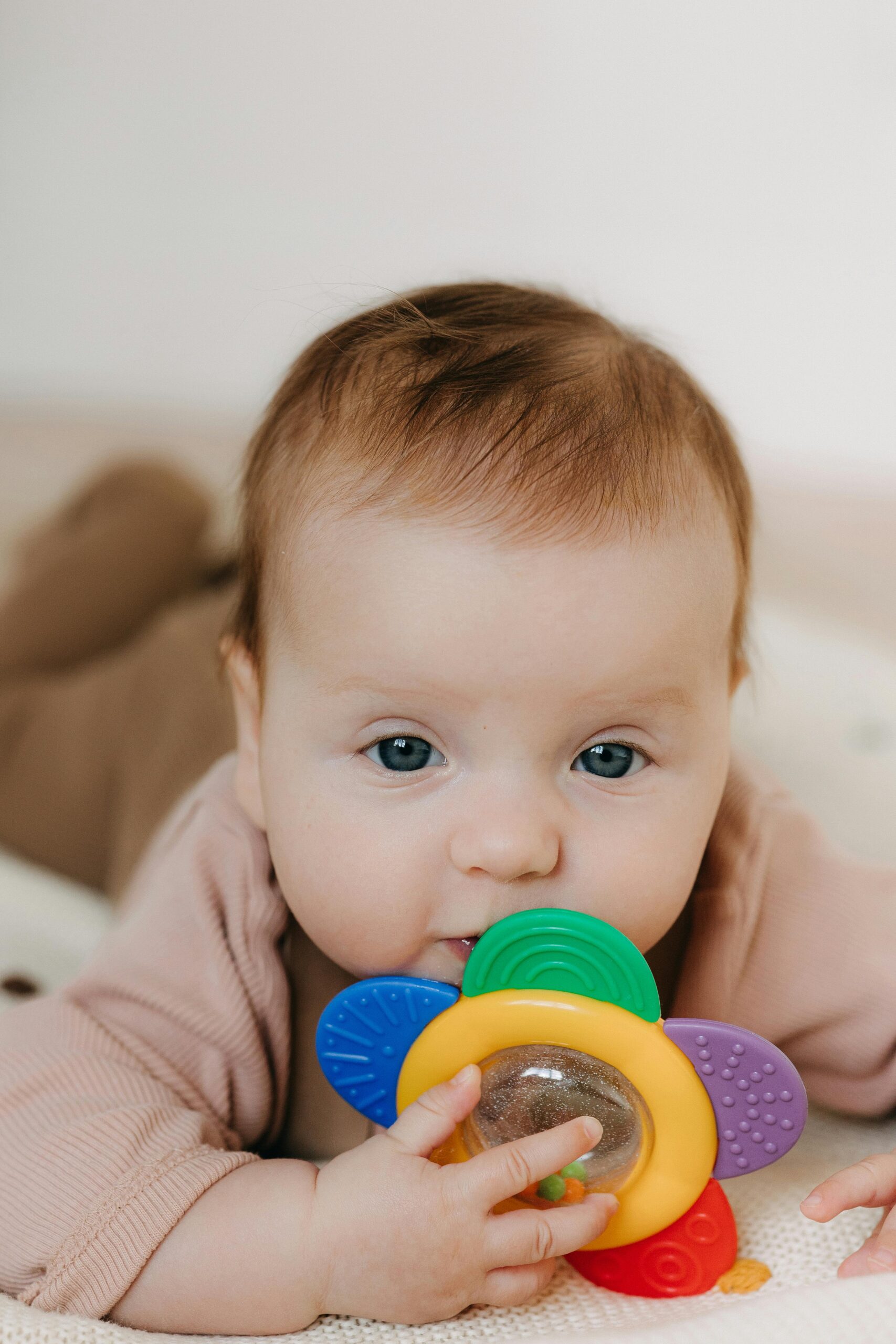
Teething toys are made to help babies deal with pain. They give you safe things to chew on, which makes you less likely to bite things that might not be clean or safe. Teething rings made of silicone are soft and gentle on the gums. Rubber teethers also work well and last a long time.
Some teething toys have rough surfaces that make the gums feel good and help teeth grow in a healthy way. Teething rings that can be put in the fridge to cool down help. Parents should make sure the toy is free of BPA, easy to clean, and big enough so that kids can’t choke on it.
If you give your baby teething toys on a regular basis, they will be less fussy and better able to handle the process.
How to Take Care of Your Gums While Teething
It’s important for your baby’s oral health to take care of their gums while they’re teething. Parents can gently wipe their baby’s gums with a clean, damp cloth after feeding them before their teeth come in. This stops bacteria from building up and keeps the mouth clean. When the first teeth come in, you should start brushing with a baby toothbrush with soft bristles.
Parents should only use a small amount of fluoride toothpaste that is safe for babies. Brushing your teeth twice a day is a good way to start good habits. You can lower your risk of tooth decay by not eating sugary snacks and drinks. Taking care of your gums is good for your teeth and sets the stage for good dental health in the future.
When to Go to the Doctor
Teething is normal, but parents should know when their child needs medical help. Teething does not normally cause a high fever, diarrhoea, a rash, or extreme irritability. If the baby doesn’t eat for a long time, they could get dehydrated. In these situations, you should see a doctor right away.
Parents should tell the paediatrician if their child hasn’t gotten any teeth by the time they are fifteen months old. Sometimes genetics are to blame for delayed teething, but a doctor can rule out other problems. If you notice any changes in the colour of your teeth or swelling in your gums that isn’t normal, you should see a dentist.
Regular dental checkups starting at age 12 months help keep an eye on healthy oral development.
Conclusion
Teething is a normal and important part of your baby’s growth. Knowing the signs and how to calm your baby down can make the process a lot easier, even though it can be uncomfortable. Parents can help their babies get through teething with confidence by using simple home remedies, taking care of their gums, giving them safe teething toys, and giving them emotional support. Every baby goes through teething at their own speed, but with love, patience, and knowledge, this stage can be a beautiful part of early childhood development.
Questions and Answers
1. When do babies usually start teething?
Most babies start teething between four and seven months, but some may start earlier or later.
2. Is a fever a sign that a baby is teething?
Teething can cause a mild fever, but a high fever is not one of them. You should see a doctor if you have one.
3. What can you do to ease the pain of teething naturally?
Teething rings, gum massage, cool washcloths, and comfort from parents all work well.
4. How many teeth should a baby have?
Most kids have twenty baby teeth by the time they are three years old.
5. Do babies who are teething eat less?
Yes, it’s normal for your appetite to change for a short time when your gums hurt.